
Game guide
How to play Novalith
You have a village on the island at the heart of an atoll. Get it producing, colonize the islets, defend it from the beasts, and lead it from the Stone Age to the stars. Here’s everything you need to get started.

The legend
The nova stone
Long ago, a star exploded—a nova—and its pieces fell into the sea. Each one punched a crater whose rim is now an atoll: an island in the middle, a turquoise lagoon, and a ring of islets on the reef. At the bottom of the lagoon, the nova stone still glows. That’s how the game got its name: nova, the star, and lithos, the stone.
Down from the sky come the winged wargs, drawn by the smell of full larders. And they say that whoever reaches the stars will be able to put the pieces back together: that is the Ascension.
In thirty seconds
-
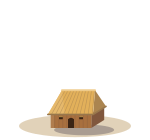
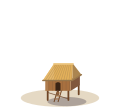
1 Your atoll
In the middle, your village and 18 plots of forest, quarry, shore, and plain. All around, the lagoon and the islets.
-

2 Produces on its own
Every plot yields resources every hour, even after you close your browser.
-
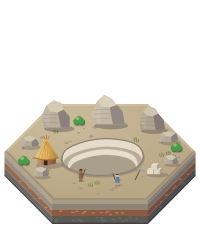
3 Upgrade
Tap a plot and pay for its upgrade: the higher the level, the more it produces. The buildings in the center boost them all.
-

4 Defend yourself
After the first day, the winged wargs arrive. A good palisade sends them running; without one, they make off with your resources.
Your address
Your atoll has a name of its own
When you found your village, you pick your @handle, which is your atoll’s address; the next ones live at /@handle/2, /@handle/3… It takes lowercase letters without accents, digits, and underscores, 3 to 30 characters long. You can change it in Your account, up top next to Log out, once every 30 days. The old one is freed up right away for anyone to take, and the old address stops leading to your atoll.
Your civilization’s name, the one others see in the ranking and on the chart, is also changed in Your account, with its own 30-day wait.
playnovalith.com/@your_name
Resources
The Stone Age has three. Every build costs a little of each, so you need them all.

Food
Source: Plains and shores
Feeds your people. Later on, your population and your troops will live off it.
Wood
Source: Forests
The most in demand: nearly everything you build needs wood.

Stone
Source: Quarries
Foundations and walls. Big builds take a lot of it.
 Gold
Gold
 Iron
Iron
 Coal
Coal
 Silicon
 Uranium
 Antimatter
Plots
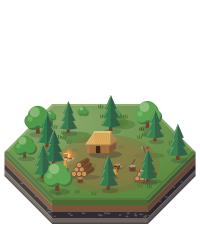
Four kinds of land. They all start out wild (level 0) and go up to level 10 in the Stone Age. You can see every level on the island: woodcutters, terraces, docks, wheat fields…
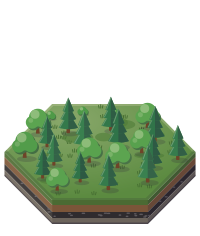
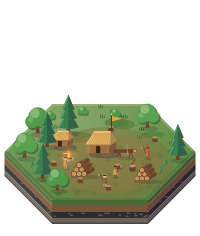
Forest · yields wood
Woodcutters and wood. Almost everything you build needs wood.
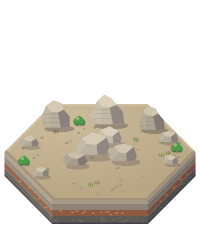
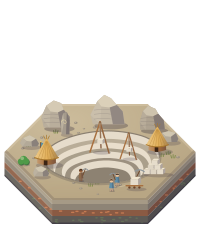
Quarry · yields stone
Stone for foundations and walls. Deeper down there’s iron, and deeper still, uranium.
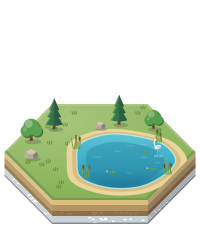
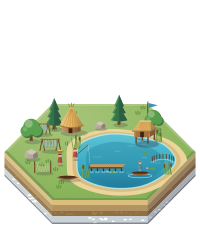
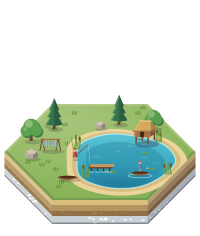
Shore · yields food
Fishing in the lagoon: it gives food. Under the sand there’s gold and, deeper down, silica.
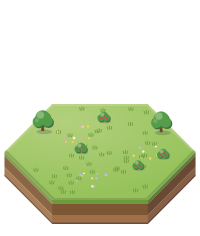
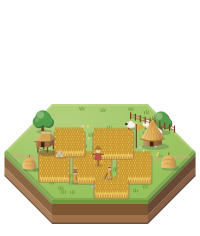
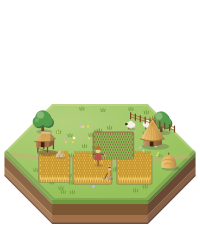
Plain · yields food
Farm fields: food for your people. The plain never changes: food is always needed.
What a plot produces per hour on a speed 1 world (on faster worlds, multiply it):
| Level | 0 | 1 | 2 | 3 | 4 | 5 | 6 | 7 | 8 | 9 | 10 |
|---|---|---|---|---|---|---|---|---|---|---|---|
| Per hour | 5 | 8 | 12 | 18 | 27 | 41 | 61 | 91 | 137 | 205 | 308 |
The village
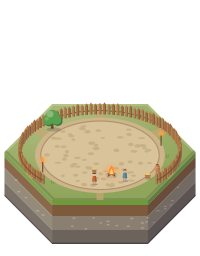
The central plaza has three buildings. They don’t produce anything, but they make everything else work better.

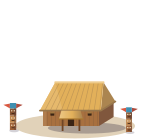
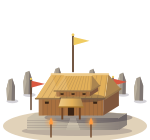
Village Center
Each level cuts another 3.5% off every build in the village. The longer the build, the more you’ll notice.

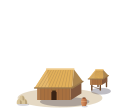
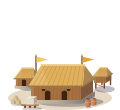
Storehouse
Sets how much of each resource you can store. A level 1 storehouse holds 1,000; anything produced beyond that is lost.
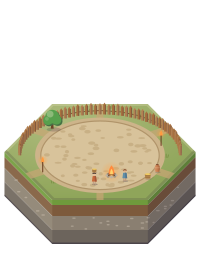
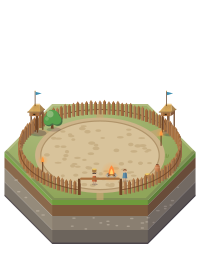
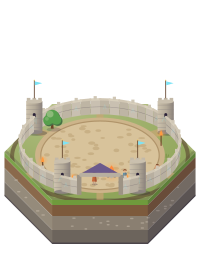
Palisade
It rings the plaza and shields the village from the beasts: at level 1 it adds 10 defense, and each level a good deal more. In time it becomes a stone wall.
Building, step by step
-
1
Tap a plot or a building.
Its card opens: what it produces now, what it will produce, and what it costs.
-
2
Tap “Upgrade.”
You pay the resources up front and construction begins. If you’re short on something, the card tells you how much and when you’ll have it.
-
3
Wait for it to finish.
The countdown sits above the plot. You can close your browser: the work carries on.
-
4
Order the next one.
Your people build one thing at a time. An idle queue is wasted time: with the menehune, you can line up several builds.
Reading the island
- 3 Green number: you can afford to upgrade it now.
- 3 Dark number: you’re still short on resources (or your people are busy).
- 3 Gold number and scaffolding: it’s under construction.
- 2nd Blue number: it’s waiting in the menehune queue.
- Upgrade this Gold arrow: what your current quest is asking for.
The night builders
The menehune
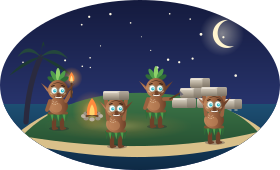
Little forest folk, short and immensely strong. The island legends say they could raise in a single night what no one had seen them begin, and that they were paid in fish.
- When their eyes glow in the forest of your island, you can call them. They ask for food: 10 for every point your village has, and never less than 100.
- They stay for an hour. While they’re here, you can line up to 3 builds in their queue, counting the one in progress. You pay for each one as you queue it.
- Each build starts on its own as soon as the previous one finishes, and the whole queue gets built even after they’ve gone. Anything that hasn’t started yet can be removed: you get back what it cost.
- Then they rest for 20 hours: they come once a day. Call them before bed and fill their queue.
- Confirm your email and they’ll come once as a gift, asking no food and even while they’re resting, and they’ll stay for 8 hours.

Seafaring
The atoll’s islets
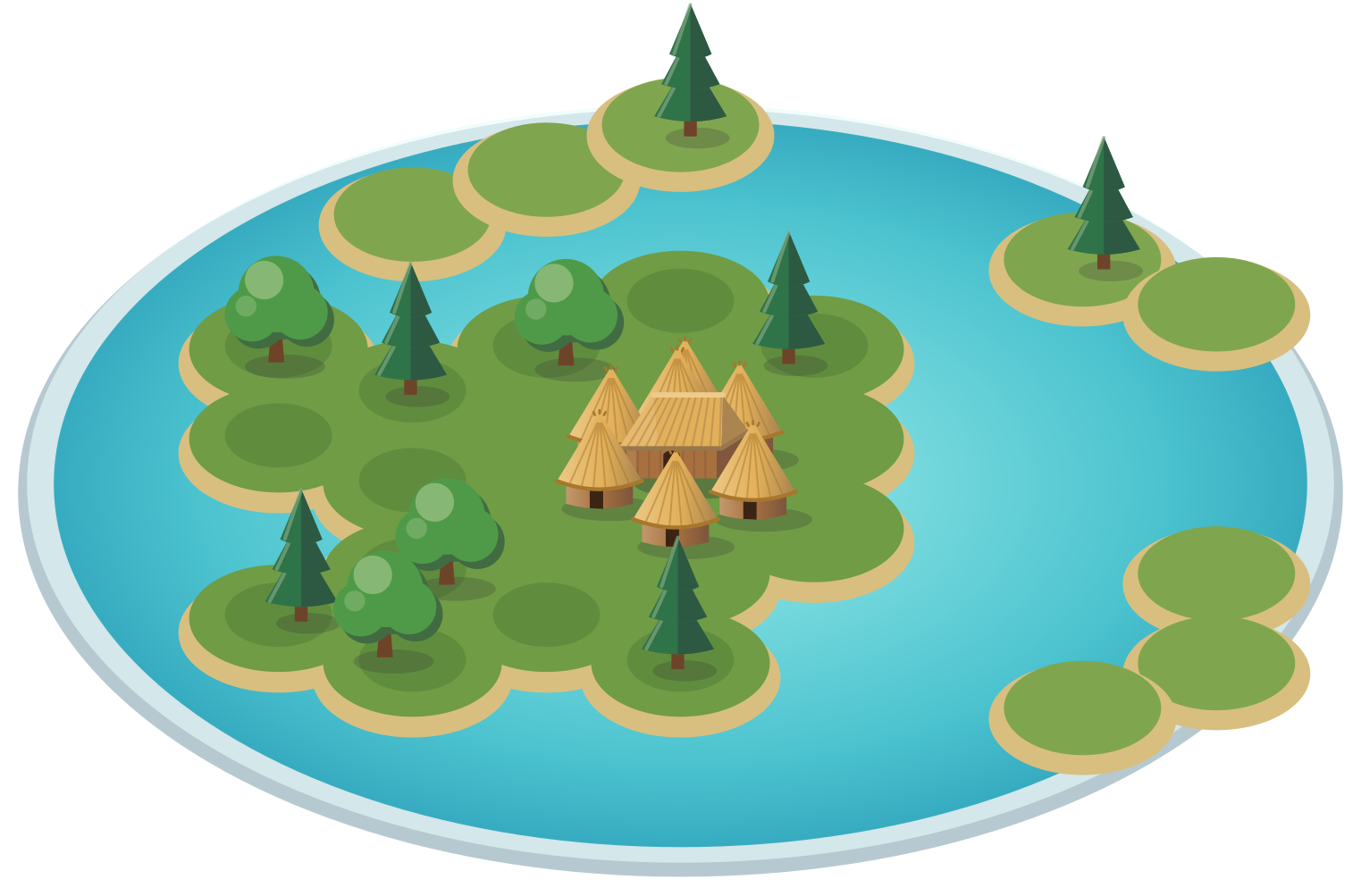
- Every player has their own atoll, each with its own shape: a peninsula, a crescent, a bay… Out on the ring of the reef lie islets with plots of their own, and no one living there.
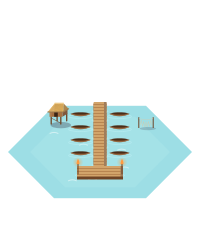
- The jetty, in the lagoon beside your island, gives you one canoe per level. At level 1 you can hold one islet; every 3 levels, one more.
- Tap a darkened islet and send an expedition: when the canoe arrives, the islet is yours and its plots start producing.
- What they produce stays in their stockpile (up to 600 of each resource). Send canoes to fetch it: each one carries 120, and you can watch them cross the lagoon.
Danger
The sky beasts
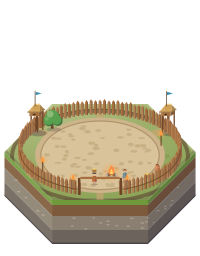
- They don’t come on your first day: that’s your beginner’s protection. After that, a pack shows up every few hours.
- You can see them coming a few hours ahead: a warning appears with the countdown, their strength, and your defense, and you’ll see them circling over the island.
- If your defense matches their strength, they flee and leave a trophy of food behind. Your defense is your palisade plus what your people can fend off on their own.
- If not, they raid: they carry off resources, at most half of each. Spending what you have before they arrive protects it too.
- If their strength is more than two and a half times your defense, they also trample a plot, which loses a level (and you, a point).
- They get stronger as your village grows: your palisade has to grow with it.

The water
The sea gods
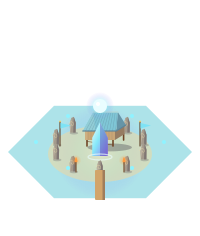
- As soon as you colonize an islet, the reef raiders arrive: war canoes that come every few hours for whichever islet holds the most. A few hours ahead, you can see them waiting outside the reef.
- Your palisade doesn’t guard the water: your patron god does. If your god is a match for them, it sinks their canoes; if not, they take part of the islet’s stockpile (at most half).
- Raise the shrine over the nova stone in the lagoon and choose your patron there. From then on, your god swims in your lagoon.
- The shrine yields favor (2 per hour per level), and you can also earn it with offerings: 10 of any resource for 1 favor. The bigger your shrine and the more favor you hold, the stronger your god.
- You can switch patrons whenever you like, but you lose all your favor.

Gladis · the orca
Huntress
Goes after raiders with 50% more strength, and keeps the loot of every one she sinks.

Martel · the hammerhead shark
Sentinel
Escorts your canoes: they travel 25% faster. And spots raiders coming twice as early.

Doña Concha · the turtle
Protector
Islets store 50% more, and raiders carry off half as much.

Bruma · the whale
Abundance
Shores catch 25% more fish, and her song warns of wargs and raiders twice as early.
The archipelago
Neighbors, warriors, and raiding
- Your atoll isn’t alone. On the archipelago chart you can see the ones around you: other players and island chiefs, atolls run by the game that bear their clan’s emblem: a shark, a manta ray, a turtle… They grow, defend themselves, and some attack, just like anyone else.
- Even from afar you can tell what each chief is like: the peaceful ones grow slowly; the steady ones never stop building; from the warlike ones you hear the drums, and they go out raiding; and some atolls end up abandoned: no smoke, and no one to defend them.
- In the war house, out in the lagoon, you train warriors one at a time. Each level makes room for 10 more. Each warrior attacks with 3, defends with 2 while at home (against the wargs, too), and carries back up to 50 in loot.
- Tap an atoll on the chart and send a raid. The farther it is, the longer the canoes take. When they arrive, if your attack beats their defense—their people, their warriors at home, and their palisade, which multiplies it—your warriors take whatever they can carry, at most half of each resource, and bring it home.
- The more you outmatch them, the fewer warriors you lose; evenly matched, half fall on each side. If you don’t know how strong their defense is, send a few: the report will tell you.
- Canoes coming for you can be seen from the moment they set sail. Train, raise your palisade, or spend what you have. And when a warlike chief heads out with their warriors, their atoll is left without them.
- When you start, you get a three-day truce (shorter on a fast world): no one can attack you. You can still raid the island chiefs; other players, once it’s over.






Together at sea
Alliances
- Once your village has grown a little, a nearby island chief your size will send you a canoe bearing a shell necklace: an invitation to join their alliance. You can also found your own, with its name, its emblem, and the dye of its sails, and invite your neighbors. Chiefs reply when they’re back on their atoll: an abandoned one never says yes, and a warlike one only joins someone stronger than they are. Up to 8 members.
- You defend each other. When someone comes for an ally, you can send them warriors from the alliance page or the chart, if they’ll get there before the attack. They fight at the ally’s side, fall just like the ally’s own, and head home when it’s over. Island chiefs in the alliance come on their own as soon as they hear the drums. And of course, you never attack an ally.
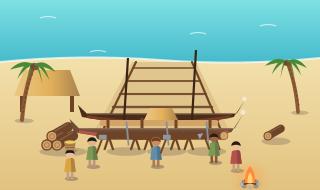
- The great canoe. At the shipyard, everyone brings food, wood, and stone: each member’s share matches their points, and the chiefs bring theirs. Once it’s finished, it’s launched, and for 7 days (less on a fast world) everyone’s island plots produce 15% more. You can see it sailing outside your reef. Then work starts on the next one, a little bigger: one a week.
- The board tells what’s going on: who joins, who’s going after whom, who’s sending warriors. The chiefs speak in their own way, and you reply with ready-made phrases: asking for help, saying thanks, sounding a warning.
Your trophy case
Achievements, streaks and friends
 The streak. Every day you play, the flame grows; miss a day and it starts over. At 2, 3, 7, 14, 30 and 100 days in a row you get a medal and a gift basket, and at 30 the menehune come too. The day changes at midnight UTC.
 Invite your friends with your link, on the achievements page. When one joins through it and brings all their plots to level 1, they bring you a basket of food, wood and stone (bigger the larger your atoll). And whoever joins gets one too. With your first friend the menehune come, with the third the wayfinders’ fire burns on your reef, and with the fifth and the tenth you get a title next to your name.
- Rewards are claimed in the village, like quests: they go to the atoll you’re looking at, even past the storehouse’s limit.
- Feats —your first raid, your patron god, the great canoe…— only bring the medal. Each one shows how many players have it: the rare ones stand out right away.






Quests
Every step has its reward
Quests tell you what to do next and complete themselves as soon as your village gets there. Then the Claim button appears: the reward is resources, and they aren’t lost even if your storehouse is full.
Points
The ranking
Every level of every plot and building is worth one point. The world ranking sorts everyone—players and island chiefs alike—by points, and counts raids won and beast raids repelled. The beasts can cost you points if they trample a plot.
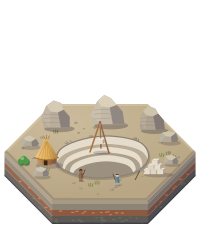
Beneath your feet
What lies beneath each plot
Look at the edges of the tiles: those are the layers. Once your civilization reaches each layer’s era, you’ll be able to dig deeper: the plot switches to producing what’s below and keeps its level. But there’s no going back.
-
Forest
Wood
Coal
-
Quarry
Stone
Iron
Uranium
-
Shore
Food
Gold
Silicon
-
Plain
Food
The six eras
Everyone starts in the Stone Age. You advance through research, and each era brings new resources, faster transport, and a higher ceiling for your plots. The round is won by the alliance that completes the Ascension, a megaproject that calls for resources from every era.
-

Stone Age Now
Food, wood, and stone · On foot
Plots, storehouse, and village center
-

Bronze Age Soon
Gold · Horses
Trade, and digging deeper on shores
-

Iron Age Soon
Iron · Carts and roads
Professional armies
-

Industrial Era Soon
Coal · Trains
Factories
-

Modern Era Soon
Silicon and uranium · Planes
Reactors
-

Space Era Soon
Antimatter · Quantum portals
The Ascension
Tips for getting started
Follow the quests
They’re designed to keep you from getting stuck: each one tells you what to upgrade and why, and pays out resources when you claim it.
A palisade before day two
Your protection lasts one day. By then, have your palisade at level 1 or 2, then keep raising it as your village grows.
A god before your first islet
Raiders show up as soon as you colonize an islet. Build the shrine first and choose your patron.
Raid the abandoned
An atoll with no smoke has no one to defend it, and its storehouses keep filling up: a few warriors, there and back, several times a day.
Come back when they do
Send your warriors out before you leave: the loot will be waiting at home. If you send them all, your village is left without them.
Accept the necklace
An alliance defends you when someone comes for you, and the great canoe makes everyone produce more. Bring your share to the shipyard every week.
Keep the queue moving
Before you leave, order the longest build you can afford. And if you’re off to bed, call the menehune and fill their queue.
Cheap things first
Every plot to level 1, then to 2… Production grows across the board.
Watch your storehouse
Each resource’s bar tells you when it’ll be full. Full means wasted production: spend, or upgrade it.
The Village Center speeds everything up
Upgrade it now and then: each level shortens every build that follows.
Don’t neglect anything
Every build takes all three resources: if you only upgrade forests, you’ll run out of stone.
What’s coming
Novalith is just getting started. Here’s what’s on the way:
- A population that needs feeding, research, and the Bronze Age, with the first chance to dig deeper.
- Diplomacy between alliances: pacts, tributes, and declared wars, plus chat between players.
- Settlers, and a second settlement on the chart.
- More troops for every era, and warriors who go out hunting beasts.
- A market, and merchants trading between players.
- The eras from Industrial to Space, and the Ascension that closes out the round.